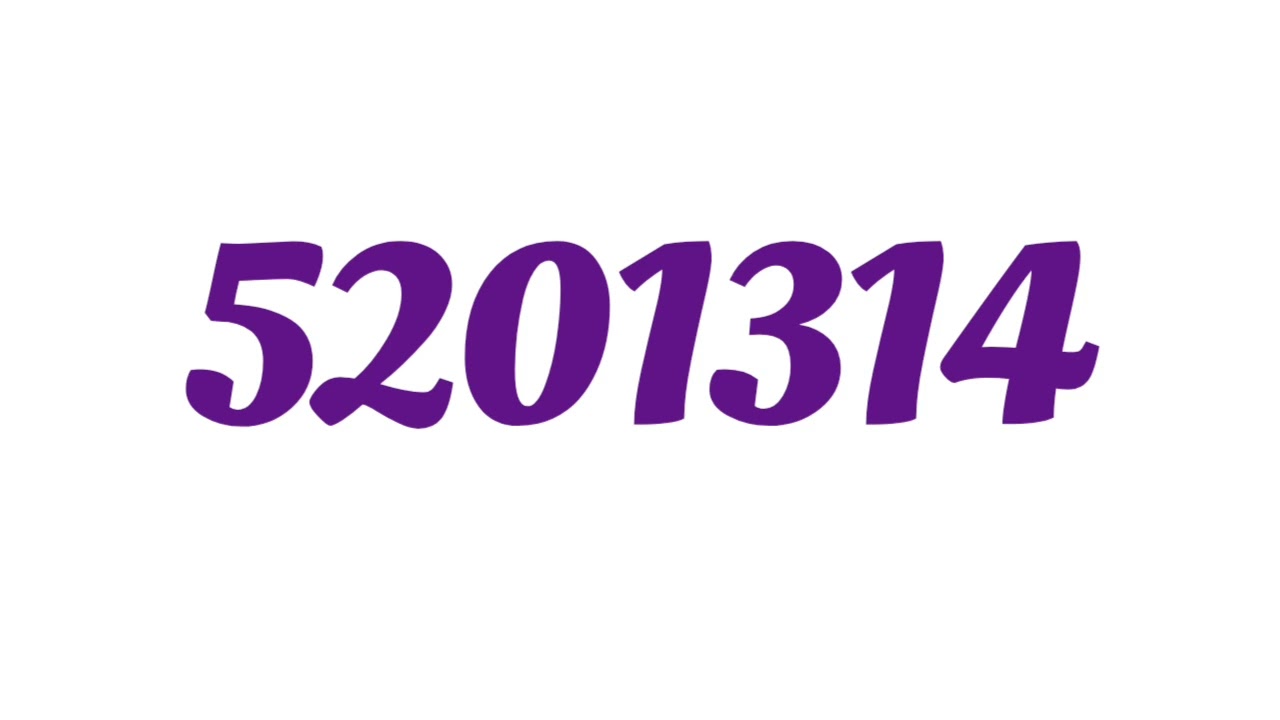
If you’ve seen people typing “52013l4” in chats or captions and wondered what it means, you’re not alone. The short answer: the 52013l4 meaning is a romantic one—“I love you for a lifetime.” But here’s the nuance: the canonical form is 5201314 (with a digit “1”), and 52013l4 (with a lowercase “l”) is usually a visual typo or stylized variant people use when fonts make “1” and “l” look similar. Understanding that distinction is key to using it confidently—and avoiding misunderstandings.
Below, you’ll find a complete, accurate, and non-generic guide that breaks down where this code comes from, how it’s really used, why May 20 matters, and how to drop it naturally in posts, DMs, or gifts.
What 52013l4 Actually Means
- Core idea: The 52013l4 meaning mirrors 5201314 and translates to “I love you for a lifetime.”
- Breakdown:
- 520 sounds like wǒ ài nǐ (我爱你) — “I love you” in Mandarin.
- 1314 sounds like yī shēng yī shì (一生一世) — “for a whole lifetime” or “forever.”
Put them together and you get a compact, romantic numeronym used across social platforms, chats, and even gift engravings. When you see 52013l4, read it as 5201314—the intent is the same.
Why Numbers Stand In For Words (and Why 520 Works)
Chinese internet culture often uses numeronyms—numbers whose pronunciations resemble words or phrases. When spoken quickly or playfully, 520 approximates wǒ ài nǐ (“I love you”). Meanwhile, 1314 approximates yī shēng yī shì (“for a lifetime”). These aren’t textbook-precise homophones; they’re internet slang approximations that became widely understood shorthand. The broader pattern is similar to how English speakers use 143 to mean “I love you.”
52013l4 vs. 5201314: Why the Letter “l” Shows Up
You’ll often see 52013l4 with a lowercase “l” in place of the final 1. Three common reasons:
- Font confusion: In many sans-serif fonts, 1, I, and l can look nearly identical, leading to accidental or aesthetic swaps.
- Hashtag/SEO variants: Creators sometimes publish multiple visually similar variants to catch searches—5201314, 52013I4, 52013l4—all pointing at the same romantic meaning.
- Keyboard slip or stylization: Some users simply prefer the “look” of 52013l4 or typed it that way once and kept it.
Bottom line: If someone sends you 52013l4, it’s safe to interpret it as 5201314—the 52013l4 meaning is unchanged: “I love you for a lifetime.”
Why May 20 (5/20) Is a Big Deal
Because 520 reads like “I love you,” May 20 (5/20) organically evolved into an Internet Valentine’s Day in China. Couples and would-be couples exchange messages, gifts, or digital red envelopes. Brands run themed campaigns, and you’ll see a spike in social chatter containing 520, 521, and 5201314. This modern celebration is distinct from Qixi (the traditional Chinese Valentine’s), and it leans heavily on digital culture and e-commerce.
Quick Glossary: 520, 521, 1314, 5201314, and 52013l4
- 520 → “I love you.”
- 521 → A related variant some use to reply or reciprocate affection (usage varies by context and couple).
- 1314 → “For a lifetime” or “forever.”
- 5201314 → “I love you for a lifetime.”
- 52013l4 → A visually varied form of 5201314; read it the same way.
Using these codes together helps you say more with fewer characters while matching a digital-native aesthetic.
How People Use 52013l4 (and 5201314) In Real Life
In messages:
- “Coffee later? 52013l4 ☕💬”
- “Happy 5/20—5201314 ❤️”
- “Anniversary surprise unlocked: 52013l4 🎁”
In posts and captions:
- “We made it through long distance. 52013l4”
- “Engraved our date and 5201314 inside the ring.”
In gifts and experiences:
- Jewelry engraving (rings, lockets): 5201314
- Custom cakes or cards: “520 + 1314”
- E-gifts or red envelopes on 5/20 with the memo 520 or 5201314
In brand promos:
- Limited editions dropping on 5/20
- Bundle deals themed around 520
- Creator challenges or duet chains tagging #520 and #5201314
Pronunciation Tips (Keep It Natural)
- 520: wǔ èr líng. It’s a playful sound-alike, not a perfect match for wǒ ài nǐ. Treat it like slang.
- 1314: yī sān yī sì, standing in for yī shēng yī shì. The charm is the cultural recognition, not phonetic perfection.
If you’re speaking aloud in English, you can just say the digits (“five-two-zero, thirteen-fourteen”) or the meaning (“love you forever”). In Mandarin contexts, 520 is frequently understood at a glance; saying “wǒ ài nǐ, yī shēng yī shì” is the literal, heartfelt phrase.
Etiquette: When the Code Lands (and When It Doesn’t)
- Great fits:
- Anniversaries, engagements, Valentine’s, 5/20
- Private jokes and DM confessions
- Captions where the numeronym aesthetic fits your brand or personality
- Use thoughtfully:
- First-time confessions: Fun, but pair with a clear sentence to avoid ambiguity.
- Work or mixed-audience channels: Remember, not everyone knows numeronyms.
- Avoid:
- Overuse in serious contexts (proposals, formal vows) unless both sides love the digital vibe.
- Ambiguous tone: If there’s any risk of misreading, say the words alongside the code.
How to Reply When Someone Sends You 52013l4
- Direct reciprocation: “5201314 too.”
- Mirror with words: “Love you—forever.”
- Playful variant: “5211314 😉” (some extend 521 + 1314 to mean “I love you forever” as a cute twist).
- Add a plan: “Dinner at 7? 5201314.”
The 52013l4 meaning keeps you in the romantic pocket; your reply can be just as short—or expand with a real plan.
Common Mistakes (and How to Avoid Them)
- Typing “l” instead of “1” accidentally: It’s fine; people will still understand 52013l4, but if you’re engraving or printing, double-check the character.
- Using it without context: If your audience isn’t familiar with Chinese internet slang, add a line that spells it out.
- Assuming perfect pronunciation: It’s a slang homophone, not a linguistics exam. The social meaning matters more than exact phonetics.
Cultural Context That Makes 520/5201314 Stick
Two forces made the numeronym mainstream:
- Digital-native expression: Short, playful codes fit texting and social feeds.
- Commercial amplification: From florists to luxury houses, 5/20 campaigns reinforced the code each year, cementing awareness among Gen Z and millennials.
That’s why you’ll see 520, 521, 1314, and 5201314 resurface every spring—and why 52013l4 meaning queries spike around May.
Creative Ways to Use 52013l4 (Without Being Cheesy)
- Design a lock screen with your anniversary and 5201314 in minimalist type.
- Order a cake with “520 + 1314” etched as two tiers of icing text.
- Make a playlist: 5 songs + 20 minutes + 13 tracks + 14 minutes—a coded setlist for your person.
- Photo dump caption on 5/20: “Grateful for you. 52013l4.”
- Engrave coordinates + 5201314 on a tiny tag or keychain.
Mini Reference: Related Love Codes You’ll See
- 520 → “I love you”
- 521 → Another “I love you” variant many use in replies
- 1314 → “For a lifetime/forever”
- 9420 → A stylized way some netizens use to hint at “just love you” in playful contexts
- 143 (English) → I-Love-You letter count
- XOXO → Hugs and kisses
Use these as scaffolding around 52013l4 to build captions with personality.
Should You Use 52013l4 or 5201314?
If you’re posting text or engraving something permanent, 5201314 is the standard. If you type 52013l4 by habit or for aesthetic reasons, it’s still understood, but for polished uses (jewelry, keepsakes, formal invites), the digit 1 is safest. For DMs, captions, and stories, either variant will convey the same 52013l4 meaning clearly to anyone in the know.
Examples You Can Copy-Paste
- “Different cities, same heartbeat. 5201314 💫”
- “First 5/20 as fiancés. 52013l4 🥂”
- “Two tickets, one lifetime. 5201314 ✈️”
- “Morning texts, forever plans. 52013l4.”
- “Not just today—5201314.”
Quick Designer Tip (Fonts Matter)
If you’re printing or engraving, choose a font where 1, I, and l are clearly distinct (e.g., tabular or slab fonts with noticeable serifs or hooks). It avoids mix-ups and keeps 5201314 unmistakably numeric.
The Takeaway
- 52013l4 meaning = “I love you for a lifetime.”
- It’s functionally the same as 5201314 and lives inside a larger ecosystem of Chinese number slang used to express affection, especially around May 20 (5/20).
- Use it with intention—DMs, captions, and lighthearted gifts are perfect; for keepsakes, stick to the canonical 5201314.
FAQs
1) Is 52013l4 the correct spelling or a typo?
It’s widely understood but typically considered a visual variant of 5201314. For polished uses (engraving, print), use 5201314. For chats and captions, 52013l4 still communicates the same meaning.
2) What exactly does 1314 stand for?
1314 echoes yī shēng yī shì (一生一世), meaning “for a lifetime” or “forever,” which turns 5201314 into “I love you forever.”
3) Why is May 20 (5/20) tied to love posts and promos?
Because 520 sounds like “I love you,” 5/20 evolved into an Internet Valentine’s Day with social posting, e-gifts, and brand campaigns each year.
4) Is 520 a perfect homophone for “I love you”?
Not perfectly; it’s a playful sound-alike from internet slang. The cultural convention, not perfect phonetics, carries the meaning.
5) What’s the difference between 520 and 521?
Both show affection. Many use 520 to confess or declare love and 521 to respond or reciprocate, though usage can be fluid and personal.
6) How should I reply if someone texts me 52013l4?
Match the vibe: reply with 5201314, write out “love you forever,” suggest a plan, or play with variants like “5211314 😉”.
7) Are there similar number codes in English?
Yes—143 is a classic (“I love you” by letter count), and XOXO signals hugs and kisses. These play the same shorthand role in English that 520/1314 do in Chinese contexts.