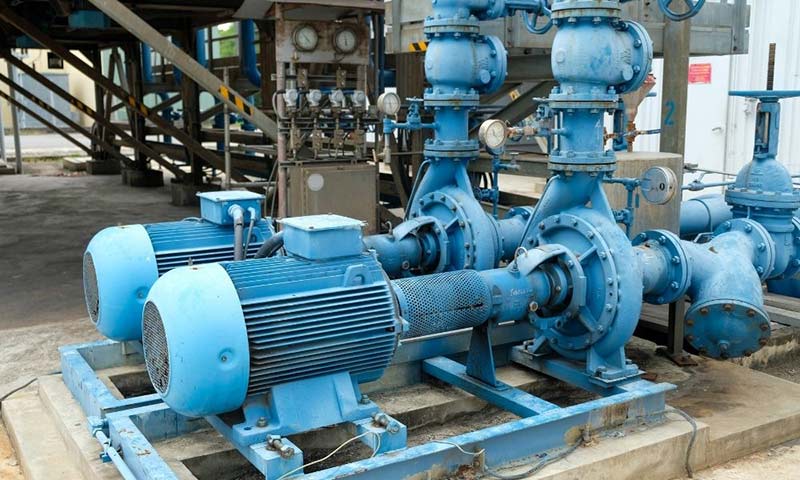
Manufacturing environments depend heavily on efficient fluid movement to maintain productivity and product quality. Whether it involves lubricating machinery, transferring viscous materials, or maintaining hydraulic pressure, reliable pumping systems are essential. Among the many technologies available, industrial gear pumps stand out for their durability, accuracy, and consistent performance.
These pumps have earned their place across multiple manufacturing sectors due to their simple design and dependable operation. This article explores how gear pumps function, what makes them effective, and why they remain a widely used solution in modern manufacturing systems.
What Are Industrial Gear Pumps
Industrial gear pumps are positive displacement pumps designed to move a fixed volume of fluid with each rotation. Instead of relying on velocity or centrifugal force, they physically carry fluid from the inlet to the outlet using rotating gears.
This design allows them to handle a wide range of fluids, including oils, chemicals, and viscous substances. Their predictable output makes them ideal for applications where precision and consistency are required.
Understanding the Working Principle
The operation of a gear pump is based on a straightforward mechanical process. Inside the pump housing are two gears that rotate in opposite directions. As these gears turn, they create expanding spaces at the inlet side of the pump.
Fluid enters these spaces and becomes trapped between the gear teeth and the pump casing. The fluid is then carried around the outer edges of the gears toward the outlet. When the gears mesh again on the discharge side, the trapped fluid is forced out under pressure.
This continuous movement ensures a steady and controlled flow, which is one of the key reasons industrial gear pumps are favored in manufacturing.
Key Components and Their Functions
Several components work together to ensure smooth operation and long service life. The gears are precision machined to maintain tight clearances, which reduces internal leakage and improves efficiency.
The casing encloses the gears and provides structural strength while maintaining the seal needed for pressure generation. Bearings support the rotating shafts and reduce friction, while seals prevent fluid from escaping and protect internal components.
Each part plays a role in ensuring the pump operates reliably even in demanding industrial environments.
Why Gear Pumps Deliver Consistent Flow
Consistency is critical in manufacturing processes that rely on accurate fluid delivery. Gear pumps provide a uniform flow rate because each rotation moves the same volume of fluid.
This predictable behavior simplifies system control and allows manufacturers to achieve precise dosing and metering. Whether used in mixing, coating, or lubrication systems, the steady output helps maintain product quality and process stability.
The Role of High Pressure in Industrial Systems
Many manufacturing applications require fluids to be moved against resistance or delivered at elevated pressures. High-pressure gear pumps are specifically designed to meet these demands.
Their tight internal tolerances allow pressure to build efficiently without significant loss. This makes them suitable for hydraulic systems, heavy machinery lubrication, and processes where controlled pressure is essential.
The ability to maintain performance under pressure contributes to their widespread use across industrial sectors.
Handling a Wide Range of Fluids
One of the major advantages of industrial gear pumps is their versatility. They can handle fluids with varying viscosities, from thin oils to thick resins and adhesives.
This flexibility allows manufacturers to use the same pumping technology across different processes. The consistent performance of gear pumps ensures smooth operation even when fluid properties change due to temperature or composition.
Energy Efficiency and Operational Savings
Efficiency plays a growing role in manufacturing decisions. Gear pumps are known for converting input power into fluid movement with minimal losses.
Because they deliver consistent flow without unnecessary energy consumption, they help reduce operating costs over time. Their efficient performance also supports sustainability efforts by lowering overall energy usage in industrial facilities.
Durability and Ease of Maintenance
Manufacturing operations often run continuously, making equipment reliability a top priority. Gear pumps are valued for their rugged construction and long service life.
With fewer moving parts compared to more complex pump designs, they are easier to maintain and inspect. Routine maintenance such as checking seals and lubrication can keep these pumps running smoothly for extended periods.
Reduced downtime and lower maintenance costs contribute to their appeal in production environments.
Applications Across Manufacturing Industries
Industrial gear pumps are used in a wide range of manufacturing sectors. In chemical processing, they provide accurate transfer of reactive fluids. In food and material processing, they support consistent flow and hygienic operation when properly designed.
They are also commonly found in power generation, plastics manufacturing, and metalworking operations. Their adaptability makes them a practical choice for facilities with diverse fluid handling needs.
Precision in Automated Manufacturing
As manufacturing becomes increasingly automated, precision becomes even more important. Gear pumps integrate well with automated control systems due to their predictable output.
By adjusting pump speed, manufacturers can control flow rates with high accuracy. This level of control supports advanced production techniques and helps meet strict quality standards.
Why Industrial Gear Pumps Remain Widely Used
Despite the availability of newer pumping technologies, industrial gear pumps continue to be widely used. Their proven design, reliability, and ability to handle demanding conditions make them a trusted solution.
High pressure gear pumps, in particular, meet the needs of systems that require strength and consistent performance. Manufacturers value equipment that delivers long term reliability without unnecessary complexity.
Industrial gear pumps play a vital role in modern manufacturing by providing reliable and precise fluid movement. Their simple operating principle, combined with durability and efficiency, makes them suitable for a wide range of applications.
From supporting high pressure systems to ensuring consistent flow in precision processes, these pumps continue to prove their value. As manufacturing evolves, industrial gear pumps remain a dependable foundation for efficient and productive operations.