30
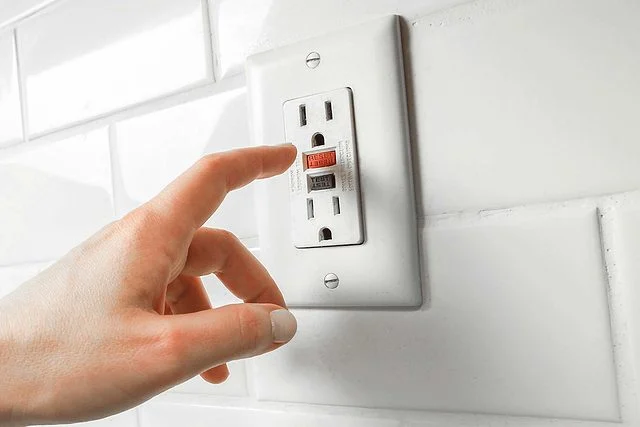
Few household disruptions are quite as jarring as getting ready in the morning only to hear a sharp mechanical snap from the bathroom wall. Your blow dryer goes dead, the vanity mirror lights flicker off, and the small rectangular reset button on the wall pops outward.
A ground fault circuit interrupter, commonly known as a GFCI outlet, is designed to react instantly when electrical current strays from its intended path. While a standard circuit breaker in your basement panel protects your home’s wiring against catastrophic overheating and structural fires, the GFCI receptacle on your bathroom wall exists specifically to protect human life from lethal electrical shock.
When a GFCI outlet trips repeatedly, it is doing exactly what it was engineered to do: cutting off power before stray current can find a path through water, plumbing pipes, or your body. However, chronic tripping quickly shifts from a reassuring safety feature to a frustrating domestic headache. Tracking down the underlying trigger requires understanding how these sensitive devices read electrical current, how bathroom environments accelerate wear, and why the source of the problem might not even be located in the bathroom at all.
How a GFCI Senses Electrical Danger
To diagnose why your receptacle refuses to stay set, it helps to understand the razor-thin margin of safety these devices enforce. Inside every modern GFCI outlet sits a miniature current transformer that constantly monitors the balance of electricity traveling between the hot wire and the neutral wire.
Under normal conditions, every milliamp of electrical current that leaves the outlet via the hot side must return in equal measure along the neutral side. If the incoming and outgoing current becomes unbalanced by as little as four to six milliamps, the internal sensing coil detects the variance in less than one-fortieth of a second.
A discrepancy of four milliamps is an imperceptible fraction of the fifteen or twenty amps running through your branch circuit, yet that tiny leakage is more than enough to cause cardiac arrest under the wrong conditions. When the GFCI senses that missing current, it assumes electricity is leaking elsewhere, such as through a frayed cord, splashing water, or a person holding a faulty appliance, and mechanically severs the connection.
Moisture and Condensation Intrusion
Bathrooms are the most humid environments in any residential home. While plumbing codes mandate GFCI protection within three feet of any water source, that close proximity guarantees ongoing exposure to ambient moisture.
Condensation Creep Behind the Wall Plate
Daily hot showers fill the bathroom with dense, warm steam. If the bathroom exhaust fan is undersized, clogged with lint, or left turned off, that moisture settles onto cooler surfaces. While you might wipe down the mirror and tile walls, steam also slips behind the outlet’s plastic faceplate.
Over weeks and months, repeated condensation can form tiny water droplets directly across the brass terminal screws and the internal printed circuit board of the receptacle. Pure water is actually an insulator, but the mineral deposits, bathroom dust, and soap film carried within household humidity create a conductive bridge. When tiny currents track across these wet residue paths between the terminals and the grounded metal outlet box, the GFCI detects the leak and trips immediately.
Direct Splash Hazards
Outlets located directly adjacent to pedestal sinks or wide vanity counters face occasional direct splashing. Even a few stray drops of water worked into the prong slots by wet fingers or a damp grooming appliance can create an intermittent ground fault. If the outlet trips primarily after the sink has been running or during vigorous cleaning, surface moisture penetrating the slot contacts is the most likely suspect.
Appliance-Specific Faults and Overheating Coils
Often, the outlet is in perfect operating condition, but the item plugged into it has developed an internal electrical defect. Personal care appliances operate in harsh conditions, enduring frequent drops, tightly wound power cords, and humid storage under damp vanities.
Deteriorating Heating Elements
Hair dryers, curling wands, and flat irons draw substantial wattage, typically between 1,200 and 1,875 watts. As these tools age, their internal heating coils expand, contract, and gradually degrade.
Dust, hair fragments, and aerosolized hairspray can settle inside the heating barrel, creating a carbonized path that allows microscopic amounts of electricity to bleed from the element into the tool’s outer frame or grounding shield. While the tool might still turn on and blow hot air, that minute current bleed crosses the four-milliamp threshold, prompting the GFCI to cut the power.
Cord and Strain Relief Fatigue
The power cord entering the base of a styling tool is subjected to constant bending, twisting, and pulling. Over time, the internal insulation surrounding the fine copper strands can crack.
When the cord is flexed at a specific angle during use, the hot and ground wires may bridge momentarily or leak power through damaged shielding. If your GFCI trips only when you move the appliance around or pull the cord taut, the fault lies within the appliance cord rather than your home’s wall wiring.
The Downstream Daisy Chain: Hidden Shared Circuits
One of the most perplexing aspects of residential electrical systems is that a single bathroom GFCI rarely operates in total isolation. In many residential builds, electricians wire multiple outlets together in series along a single branch circuit to save on materials and labor.
Under this setup, the first GFCI outlet in the line acts as a master sentry. Its load terminals feed power downstream to secondary, standard-looking outlets located in other rooms. If an electrical fault occurs anywhere along that downstream line, the primary bathroom GFCI trips to protect the entire run.
Exterior and Patio Receptacles
In many single-family homes built throughout the 1980s, 1990s, and early 2000s, building codes permitted builders to protect outdoor patio or porch outlets by running them off the primary master bathroom GFCI.
If an outdoor receptacle has a cracked weatherproof cover, morning dew, driving rain, or an automated lawn sprinkler can saturate the outdoor box. The outdoor moisture creates a ground fault on the exterior of your house, but the reset button that pops is sitting on your second-floor master bathroom vanity. If your bathroom outlet tends to trip during heavy rainstorms or early damp mornings without anyone touching it, inspect your exterior receptacles for water intrusion.
Powder Rooms and Garage Outlets
Similarly, guest powder rooms, garage workbench outlets, and even unfinished basement receptacles are frequently tied to the load side of an upstairs bathroom GFCI.
A dehumidifier running in the basement, an old refrigerator plugged into the garage wall, or an accent lamp in a half-bath can develop a ground fault that forces your main bathroom outlet to shut down. Identifying which outlets lose power when the master bathroom GFCI trips is the quickest way to map out this hidden network.
Aging Receptacles and Component Breakdown
Like any mechanical and electronic device, GFCI receptacles have a finite operational lifespan. While standard three-prong outlets can easily last several decades, the sophisticated internal electronics of a GFCI degrade much faster.
Most manufacturers design GFCI receptacles to last between ten and fifteen years. Over that span, the sensitive internal sensing coils, mechanical trip springs, and electromagnetic solenoids endure thousands of thermal cycles, household power surges, and occasional lightning strikes.
A power surge from a summer storm can easily fry the internal microchip without leaving any scorch marks on the plastic faceplate. When the internal circuitry fails, modern safety standards require the outlet to fail in a safe, open state, meaning it will refuse to reset and will lock out power permanently. If your outlet is well over a decade old and trips without any appliances plugged into the entire circuit, the internal components have likely reached the end of their service life.
Loose Wiring and Overcrowded Junction Boxes
Electrical current causes wires to warm up slightly and expand during use, cooling and contracting when the power is turned off. Over years of thermal movement, terminal screws can slowly back out, loosening the mechanical grip on the copper conductors.
A loose neutral or ground wire inside the electrical box can shift slightly when heavy footsteps shake the floor or when cabinets are shut nearby. If a loose copper ground wire brushes against a neutral terminal screw, it creates an instant path to ground that triggers the sensing coil.
Furthermore, older bathroom junction boxes are often cramped, housing thick twelve-gauge wires alongside bulky early-generation GFCI bodies. Cramming these stiff wires into a tight metal or plastic box can pinch insulation, creating an intermittent short circuit that triggers unpredictable trips.
A Practical Diagnostic Sequence for Homeowners
Before calling an electrician or replacing hardware, you can pinpoint the source of the trip by following a systematic elimination process.
First, unplug every single device plugged directly into the tripping GFCI outlet. Press the Reset button firmly until you hear a clear, solid click. If the button stays depressed and power restores, the problem is almost certainly an individual appliance rather than the building wiring.
Second, test your grooming appliances one at a time. Plug your hair dryer in, turn it on, and run it through its heat settings while gently moving the cord near the handle. If the outlet trips only when a specific device turns on or flexes, replace or repair that tool.
Third, if the GFCI trips immediately with nothing plugged in, track down downstream receptacles. Walk through your home and test the outlets in other bathrooms, the garage, the basement, and exterior walls. If any of those outlets are also dead, unplug every device connected to them. Check outdoor outlets for dampness, insect nests, or worn foam gaskets.
Fourth, examine the outlet faceplate. Modern GFCIs manufactured within the last decade feature a small indicator light. A solid green light typically indicates normal operation, while a blinking or solid red light indicates that the internal auto-monitoring diagnostic has detected a failed component and the unit must be replaced.
When to Bring In a Licensed Electrician
While unplugging faulty appliances and clearing surface moisture are straightforward DIY tasks, working behind the drywall requires professional expertise.
If you have isolated the circuit, verified that no appliances are plugged in, and confirmed that downstream boxes are dry, the issue points to damaged in-wall wiring, a shared neutral on a multi-wire branch circuit, or a failing receptacle that must be swapped out. Working inside bathroom electrical boxes involves working near copper water pipes, which provide an exceptionally direct path to ground. A licensed electrician can test the circuit with a dedicated ground fault analyzer, verify that the circuit is balanced properly in the main electrical panel, and install a modern, weather-resistant, self-testing receptacle that will keep your household safe for years to come.